
With a quick look at today’s app stores, you’ll find millions of applications competing for user attention. The real challenge is no longer getting downloads, it is Increasing Customer Engagement and keeping users coming back.
In fact, studies show that nearly 25% of users open an app only once and then abandon it forever. This happens because we are living in what is known as the “attention economy,” where every second a user spends inside your app is a valuable asset.
So, what truly separates a successful app that generates millions from another that gets forgotten? The answer lies in effective strategies for increasing engagement.
How do you make your app magnetic?
How do you transform it from just an icon on a screen into a daily habit?
After analyzing thousands of successful case studies, this guide will walk you through practical, real-world techniques to help you dramatically boost engagement and retention.
Why Is Customer Engagement Important?
Many people assume that the number of downloads is the ultimate measure of success. However, the harsh reality is that downloads without engagement are nothing more than vanity metrics.
Engagement is the true engine behind profitability. Without engagement:
- There is no user retention
- Without retention, you are forced to continuously spend on acquiring new users
- And without meaningful interaction, your app cannot evolve based on real user needs
On the other hand, when you focus on Increasing Customer Engagement, your app becomes a powerful data engine that reveals what users actually want. This reduces the risk of failure when launching new features or products.
Moreover, applying effective strategies for increasing engagement directly impacts your business growth:
Lower Customer Acquisition Cost (CAC)
Acquiring a new user can cost up to 5 times more than retaining an existing one. High engagement leads to loyalty, and loyalty means sustainability.
Higher Customer Lifetime Value (LTV)
The more engaged a user is, the more likely they are to make repeat purchases, upgrade subscriptions, and stay longer.
Improved App Store Ranking (ASO)
Algorithms in Google Play and the Apple App Store prioritize apps with higher retention rates and longer session durations. Engagement naturally pushes your app toward the top.
Tip 1: Improving User Interface (UI/UX)
When we talk about Improving user interface, we are not just referring to attractive colors or modern visuals. We are talking about creating a smooth, frictionless journey.
Think of your app as a new house. If users cannot easily find the light switch, they will leave immediately. That’s why great UI design starts with intentional simplicity:
- Remove anything that does not serve a clear purpose
- Focus on clarity and ease of navigation
- Guide the user naturally without confusion
A smart UI relies on understanding human attention patterns. Users typically scan screens in an “F-shape,” which means your most important elements should be positioned along these natural visual paths.
Another critical factor is visual feedback:
- When a user taps a button, there should be a clear response
- Subtle animations or color changes reassure users that the app is working
For example, in high-performing apps, the “Add to Cart” button is not only visible but also supported by a smooth confirmation message that does not interrupt the browsing flow.
These small but intentional details are what make the experience seamless and encourage users to explore more, which is essential for Increasing Customer Engagement.
Tip 2: Personalizing the User Experience
The era of one-size-fits-all applications is over. Today, the secret behind Increasing Customer Engagement lies in deep personalization. Users want to feel that the app understands them and adapts to their needs. Personalization starts from simple touches, like displaying the user’s name, but goes much deeper into behavioral analysis:
- Tracking user preferences
- Understanding purchase habits
- Delivering relevant content at the right time
For example, if a user frequently buys sportswear, showing kitchen tools on the homepage creates friction instead of value. This is where AI-powered systems play a major role. They silently analyze behavior and build a dynamic interest profile for each user.
Real-world example
Imagine a grocery app that recognizes a user’s habit of buying milk every Sunday. On Sunday morning, the app highlights milk on the homepage with a small offer. This type of personalization:
- Saves time
- Feels intuitive
- Builds emotional connection
When users feel that the app simplifies their life, engagement becomes natural and automatic. They are far less likely to switch to competitors offering generic experiences.
Tip 3: Effective Push Notifications
Push notifications are one of the most powerful tools for Increasing Customer Engagement, but they can also lead to app uninstalls if used incorrectly. The secret lies in two factors: value and timing.
Generic notifications like: “New offers available”
are ineffective because they lack relevance.
Instead, successful apps send targeted, meaningful messages based on user behavior.
For example:
If a user adds products to the cart but does not complete the purchase, a well-timed notification such as:
“Your cart is waiting. Complete your order now and enjoy 5% off.”
creates urgency and provides real value.
Timing is equally important:
- Notifications should respect the user’s time zone
- Avoid sending messages during sleep hours
Another powerful approach is interactive notifications, allowing users to take action directly from the notification without fully opening the app. This reduces friction and significantly boosts Increasing Customer Engagement by making interaction effortless.
Tip 4: Improving App Speed: The Big Impact of App Speed on Engagement

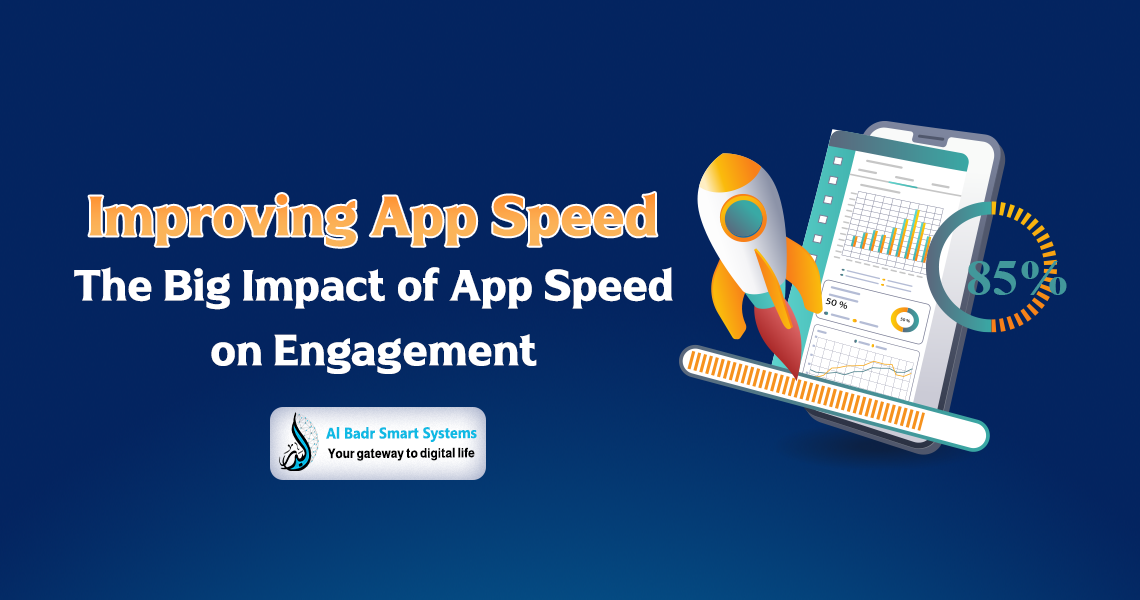
You may have the most beautiful design in the world, but if your app is slow, all your efforts will fail. Speed is both the first and last impression of your brand. Research shows that even a one-second delay in app response time can reduce engagement by up to 20%. Improving speed is not just about compressing images, it is a complete development philosophy that includes:
- Writing clean, efficient code
- Using strong servers and infrastructure
- Optimizing performance across all devices
One effective technique is smart caching, where previously accessed data loads instantly without re-fetching. Additionally, your app must perform reliably even under poor internet conditions. Users often access apps while commuting or in low-connectivity areas. Ensuring smooth performance in these situations builds trust, and trust is a key driver of long-term engagement.
Tip 5: Regularly Adding Valuable Features
The relationship between a user and an app is very similar to any human relationship, it needs renewal to survive. Neglecting updates sends a clear message that the company is no longer evolving or doesn’t care about its users.
However, adding updates does not mean changing everything and confusing users. It means introducing real value that makes their lives easier, which is essential for Increasing Customer Engagement.
Every new feature should be introduced with a smooth in-app walkthrough that explains its benefit in a simple and engaging way. For example, if you have a task management app:
- Adding voice collaboration
- Integrating with calendars
- Improving reminders
These updates make existing users feel that the app is growing alongside their needs. Regular updates also give you a powerful advantage:
- Your app reappears in the “recent updates” section in app stores
- Users are reminded of your presence
- Engagement gets a natural boost
Consistent updates act as a silent message to users:
“We are continuously working to serve you better.”
Tip 6: Integrating with Social Media Platforms
Humans are naturally social. They love to share their experiences. If your app operates in isolation, disconnected from the outside world, you are missing one of the biggest drivers of Increasing Customer Engagement. Social media integration is not just about adding a “share” button. It’s about creating a shareable experience.
Take fitness apps as an example:
- They allow users to share running routes
- Display step counts in visually appealing formats
- Include branded visuals
When users post these on Instagram or Facebook, two powerful things happen:
- Users feel proud of their achievements
- Your app gains free exposure and attracts new users
Another key factor is simplifying onboarding:
- Allow users to sign up using social accounts
- Eliminate long, boring forms
- Reduce friction at the first interaction
This seamless entry point is a core part of Improving user interface and plays a major role in boosting engagement from the very first moment.
Tip 7: Offering Rewards and Incentives
Nothing drives engagement more effectively than the feeling of reward. That’s why gamification has become a critical component in modern apps aiming at Increasing Customer Engagement. Rewards don’t always have to be financial. In many cases:
- Status
- Recognition
- Exclusive access
can be even more powerful.
You can implement systems such as:
- Points for daily app usage
- Rewards for writing reviews
- Loyalty programs tied to purchases
These points can later be redeemed for discounts, gifts, or premium features.
Example
Many successful coffee apps use a simple concept: “Collect stars to get a free drink.” This strategy works because:
- It creates a sense of progress
- Users don’t want to lose their accumulated rewards
- It builds a habit of repeated usage
A well-designed reward journey strengthens both emotional and financial connection between the user and your app.
Tip 8: Simplifying Registration and Checkout: How Reducing Steps Increases Engagement
In many applications, users don’t leave because the idea is weak, but because the journey is too complicated. Every extra screen, unnecessary field, or redundant confirmation is another فرصة for the user to drop off and close the app. Therefore, if you want to increase customer engagement, you need to make reaching the goal as fast as possible—whether that goal is creating an account, completing a purchase, booking a service, or even contacting support.
Simplifying registration is not just about reducing the number of fields; it’s about eliminating anything that doesn’t add real value at that moment. It doesn’t make sense to ask for detailed information from the user on their first visit if it’s not immediately needed. Instead, start with only the essentials, such as a name and phone number or email, then gradually collect additional data over time. This approach creates a sense of ease and comfort, allowing users to engage with the core experience quickly without feeling overwhelmed.
For example:
If you have an e-commerce app, it’s better to offer users the option to check out as a guest or sign up quickly using Google or Apple, rather than forcing them to create a full account before completing their first purchase. Additionally, reducing checkout steps, clearly displaying the final cost, and providing fast and convenient payment options all help build trust and increase the likelihood of completing the transaction successfully.
At Al Badr Smart Systems, we believe that every extra click could mean a lost customer. That’s why we focus on designing streamlined and intuitive user journeys that make engagement faster, easier, and more comfortable for users.
Data Analysis and Continuous Optimization
After applying all these strategies, how do you know if they are working? The answer is data. Data analysis is your compass. You cannot improve what you cannot measure. You need to track the entire user journey:
- Where do users spend the most time?
- At which step do they drop off?
- What actions lead to conversions?
This is where funnel analysis becomes essential.
For example:
If 70% of users add items to the cart, but only 10% complete the purchase, this clearly indicates a problem.
Possible reasons include:
- Complicated checkout process
- Too many required fields
- Unexpected shipping costs
By identifying these issues, you can make precise improvements. Increasing Customer Engagement is not a one-time task.
It is a continuous cycle:
- Design → Measure → Analyze → Improve
This data-driven approach is what separates average apps from high-performing ones.
FAQ about Increasing Customer Engagement
Does app size affect engagement?
Yes. Large apps may discourage downloads or get deleted when storage is full. Balancing features with optimized size is crucial for long-term engagement.
How can I re-engage inactive users?
You can use re-targeting campaigns through email or personalized push notifications. Offers like “We miss you” combined with strong incentives can effectively bring users back.
Does app language impact engagement?
Absolutely. Speaking the user’s language, whether formal or local, builds trust and familiarity, which directly improves engagement.
Why Choose Al Badr Smart Systems?
If you are serious about Increasing Customer Engagement, you need more than just a technically functional app. You need a complete, well-crafted experience. At Al Badr Smart Systems, we combine:
- Strong development foundations
- Deep understanding of user behavior
- Expertise in the Arab market
We believe that engagement is built on:
- Clean and scalable code
- Thoughtful UI/UX design
- Integrated backend systems that connect everything seamlessly
When you work with us, you are not just hiring developers. You are partnering with a team that analyzes every detail, from server performance to button placement, ensuring your app stands out and succeeds.
Final Thoughts
Technology exists to serve people, not the other way around.
Increasing Customer Engagement is a long-term process built on trust. It starts with Improving user interface, grows through personalization and rewards, and evolves through continuous optimization.
The mobile app industry is moving fast. Those who fail to adopt effective strategies for increasing engagement will quickly fall behind.
The question is no longer whether your app exists, but whether it truly connects with users.
