
The question today is no longer “Do I need a website?” but rather “How intelligent is my website?”
Artificial Intelligence in Web Design has become the backbone of modern digital success. In fact, recent insights show that over 62% of professional designers in 2025 have already integrated AI tools into their daily workflows. Even more impressive, websites powered by AI-driven personalization have seen over a 50% increase in average time on page.
So what does this mean for you as a business owner or designer? And how can this digital intelligence turn your vision into engaging interfaces that drive real results? In this guide, we’ll break down everything you need to know about Using Artificial Intelligence to build a powerful online presence.
What Is Artificial Intelligence?
Before diving into applications, it’s important to understand the core concept.
Artificial Intelligence (AI) is not just about robots or automation, it is a branch of computer science focused on building systems capable of performing tasks that typically require human intelligence. This includes:
- Learning from data
- Logical reasoning
- Self-correction and adaptation
In Artificial Intelligence in Web Design, AI goes beyond writing code. It involves technologies like machine learning and natural language processing (NLP), enabling systems to understand context rather than just execute commands.
For example, when AI is trained on thousands of successful website designs, it identifies patterns that make layouts visually appealing and user-friendly, then applies those insights directly to your project. This is the key difference between traditional programming and intelligent, data-driven design.
How Artificial Intelligence Improves Web Design
The role of Artificial Intelligence in Web Design is not only about aesthetics, it is deeply functional and performance-driven. Here are the key areas where AI makes a real impact:
1- Faster Production and Efficiency
In the past, creating a website prototype could take days of collaboration between designers and clients.
Today, with AI tools for web design, you can generate multiple design variations within hours. Artificial Intelligence in Web Design can:
- Select suitable fonts automatically
- Generate color palettes based on audience psychology
- Arrange layout elements for optimal visual flow
This dramatically reduces production time while improving quality.
2- Predictive Design
AI shifts design from reactive to proactive.
Instead of guessing user behavior, AI analyzes massive datasets to predict how visitors will interact with your site. For example:
- Where should the “Buy Now” button be placed?
- What layout increases click-through rates?
These decisions are no longer based on personal opinion, but on real behavioral data processed by advanced algorithms.
3- Automation of Repetitive Tasks
Many time-consuming tasks are now handled instantly through AI, such as:
- Image cropping and optimization
- Background removal
- Generating alt text for SEO
- Content suggestions and enhancements
This allows designers and developers to focus on strategy and creativity instead of routine work.
Popular AI Tools for Web Design
If you want to master Using Artificial Intelligence effectively, you need to know the tools that truly make a difference:
- Wix ADI (Artificial Design Intelligence): Automatically creates a full website after asking a few simple questions about your business.
- Framer AI: Transforms written ideas into interactive website designs, making UI creation faster and more intuitive.
- Adobe Sensei: Powers Adobe tools with AI capabilities for smarter visual editing and design decisions.
- Midjourney & DALL·E 3: Generate unique, high-quality visuals that enhance your brand identity and eliminate reliance on stock images.
- ChatGPT & Gemini: Assist with content creation, wireframing, and even generating custom CSS and JavaScript for your website.
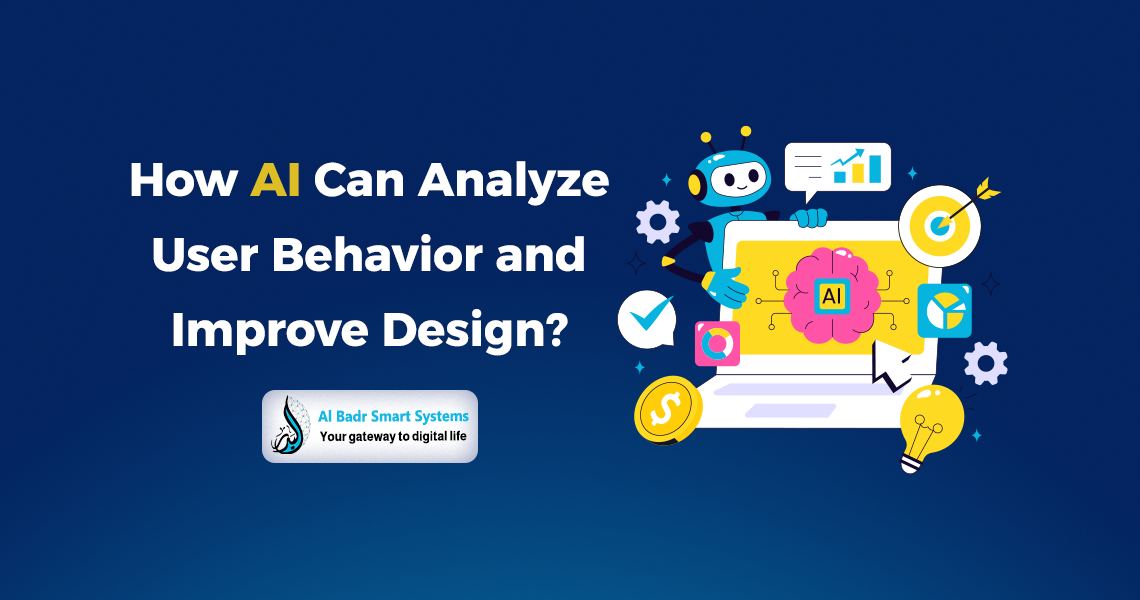
How Can Artificial Intelligence Analyze User Behavior and Improve Web Design?
This is where Artificial Intelligence in Web Design truly becomes powerful. Imagine your website equipped with “smart sensors” that don’t just track clicks, but actually understand user intent. With advanced tools powered by Artificial Intelligence in Web Design, every interaction is analyzed:
- Mouse movements
- Scrolling behavior
- Click patterns
These actions are transformed into precise heatmaps that reveal exactly how users interact with your site. For example, if visitors consistently stop at a specific section and then leave, AI flags it immediately as a potential friction point. This could mean:
- The design is too complex
- The content is unclear
- The layout disrupts user flow
Based on this data, Artificial Intelligence in Web Design can automatically run A/B tests. It shows different versions of a page to different users, then selects the version that performs better in terms of engagement or conversions. This is the real essence of Using Artificial Intelligence to optimize user experience.
How AI Enhances User Experience (UX)
User experience is the core of any successful website, and AI takes it to an entirely new level.
Instead of offering the same experience to everyone, AI personalizes the website dynamically:
- Returning visitors may see different layouts than new users
- Content adapts based on behavior and preferences
- Navigation becomes more intuitive over time
Search functionality also becomes smarter. Even if users make spelling mistakes, AI understands their intent and delivers relevant results.
Additionally, Artificial Intelligence in Web Design improves accessibility by:
- Generating alt text for images automatically
- Adjusting color contrast for users with visual impairments
- Enhancing readability for different audiences
This makes your website not only smarter, but also more inclusive and user-friendly.
The Role of AI in Real-Time User Interaction
Modern users expect instant responses. If they don’t get them, they leave. This is where AI chatbots play a critical role.
Powered by natural language processing, these chatbots go far beyond simple automated replies. They can:
- Understand different dialects: Recognize variations in language across regions and respond accordingly
- Analyze user sentiment: Detect frustration or dissatisfaction and adjust tone instantly
- Provide smart recommendations: Suggest related products or services based on user needs
- Enable cross-selling opportunities: Increase order value by recommending complementary solutions
This level of real-time interaction transforms websites into active sales and support channels rather than static pages.
Challenges of Using Artificial Intelligence in Web Design
Despite its advantages, AI tools for web design come with both technical and ethical challenges.
1- Technical Challenges
- Over-reliance on AI may weaken designers’ creativity and fundamentals
- Poor training data leads to poor design outputs
- Implementing AI systems requires strong infrastructure such as cloud hosting and API integrations
2- Ethical Challenges
- User data must be collected transparently and with clear consent
- Ownership of AI-generated designs remains a complex legal issue
- Algorithms may unintentionally reinforce biases if not properly monitored
How Will Artificial Intelligence Transform Web Design in the Future?
The impact of Artificial Intelligence in Web Design goes far beyond speeding up tools. It is reshaping the very foundation of how design works. The future is not about replacing human creativity, but about redefining the relationship between humans and machines.
1- From Static Design to Adaptive Experiences
In the past, web design was a fixed outcome. A single interface was created and delivered to all users in the same way.
In the future, design will become a living system that evolves based on user behavior and context.
AI will analyze:
- Interaction patterns
- Decision-making speed
- Cultural background and visual preferences
Based on this data, the interface will automatically adapt to each user, delivering a more personalized and effective experience. There will no longer be one “perfect” design, but rather a design that continuously learns and improves.
2- The End of Manual Execution
Traditional design relies heavily on repetitive technical work such as alignment, adjustments, and constant revisions. With Using Artificial Intelligence, this phase will gradually disappear.
Instead of asking:
- “How do I build this design?”
Designers will start asking:
- “What should the user feel?”
AI tools will handle execution, while designers focus on:
- Defining the vision
- Crafting the message
- Shaping the emotional and visual experience
3- From Executor to Creative Director
The role of the designer will not vanish, it will evolve. Future designers will become:
- AI guides and decision-makers
- Evaluators of output quality
- Strategic and creative leaders
They will oversee intelligent systems capable of generating countless design variations, but the final judgment will always remain human.
Designers will decide:
- What truly resonates with users
- What reflects the brand identity
- What should be rejected despite technical efficiency
4- Design as a Continuous Conversation
With emerging technologies like voice-to-design, the process will become more interactive and dynamic.
Design will turn into an ongoing dialogue:
- An idea is expressed
- A prototype is generated
- The experience is tested
- Adjustments are made in real time
Design will no longer be a one-time phase, but a continuous process that evolves alongside the product.
Artificial Intelligence in Web Design will not make design cold or mechanical. On the contrary, it will push designers to become more human-centered, more aware of behavior, and more focused on emotions and intent.
The future does not belong to those who simply know how to use tools, but to those who understand people and know how to guide intelligent systems to serve them.
FAQ About AI in Web Design
Does Artificial Intelligence replace human developers?
Not at all. AI replaces repetitive and time-consuming tasks, but creativity, strategic thinking, and understanding human emotions remain uniquely human strengths that machines cannot fully replicate.
Does AI affect website speed?
On the contrary, Artificial Intelligence in Web Design often improves performance. AI-powered tools optimize code, compress images, and enhance overall efficiency, making websites faster than many traditionally built ones.
How can I start integrating AI into my website?
You can begin by:
- Adding an AI-powered chatbot for real-time interaction
- Using AI analytics tools to track user behavior and identify weak points
- Implementing smart personalization features
These steps allow you to gradually adopt Using Artificial Intelligence without rebuilding your entire website.
Al Badr Smart Systems: Your Gateway to AI-Powered Web Design
If you are looking for a the best smart website design companythat truly understands the future, you need a partner that speaks the language of innovation.
At Al Badr Smart Systems, we don’t just design and develop websites, we build intelligent digital ecosystems designed to grow your business.
Why choose us?
- We understand code from the ground up, enabling seamless AI integration
- We connect your website with accounting and inventory systems for full automation
- We leverage AI to improve your search engine visibility
- Our team provides continuous support, because technology should always include a human touch
Final Thoughts
Artificial Intelligence in Web Design is not a trend, it is an ongoing transformation that is reshaping the digital world.
The future belongs to businesses that adapt, innovate, and invest in intelligent digital experiences. It is no longer about having a website, but about how smart, responsive, and personalized that website is.
Are you ready to make your website speak the language of AI?
Start today, and build a digital platform that stays ahead of its time.
